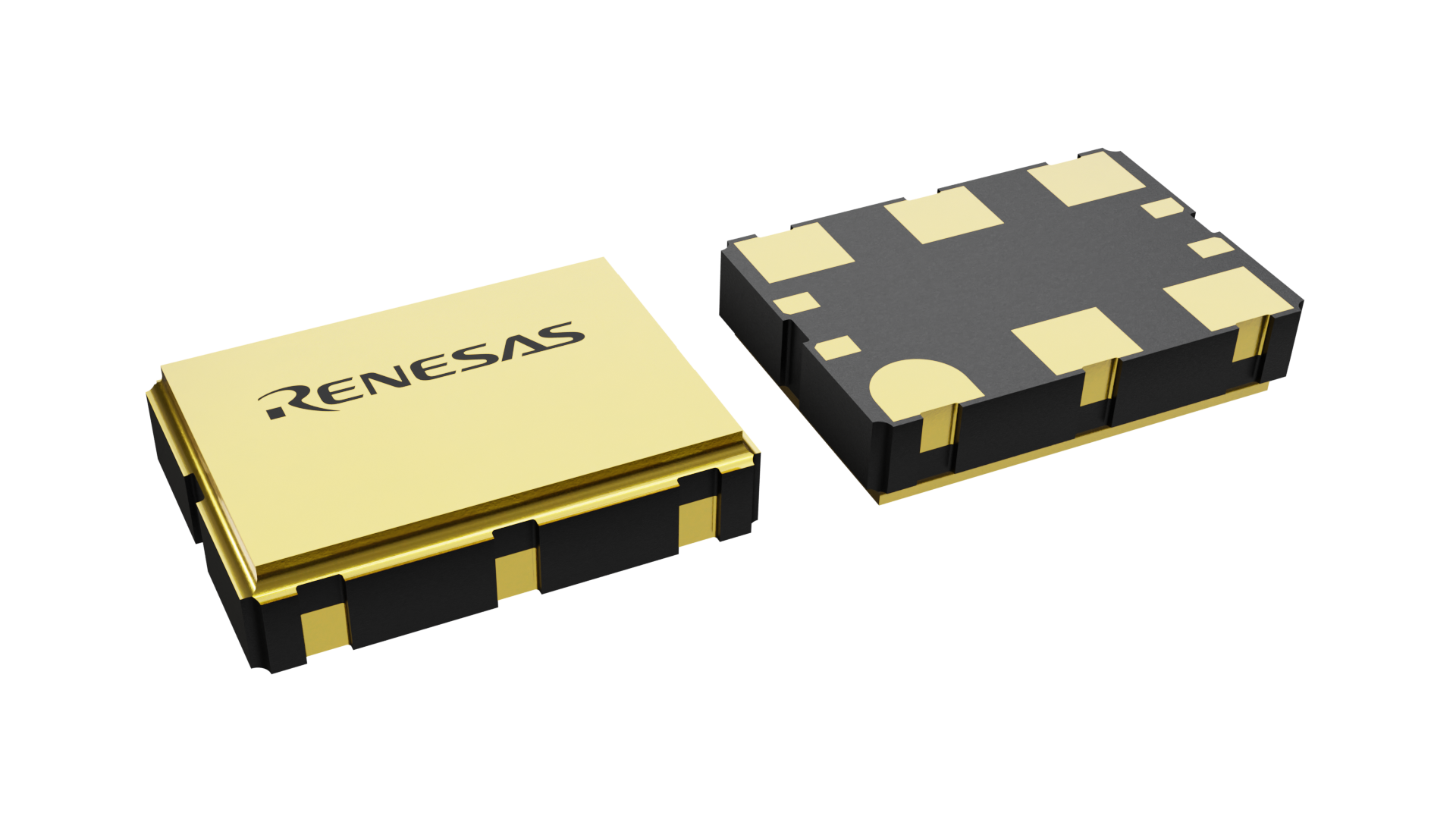

| CAD 模型: | View CAD Model |
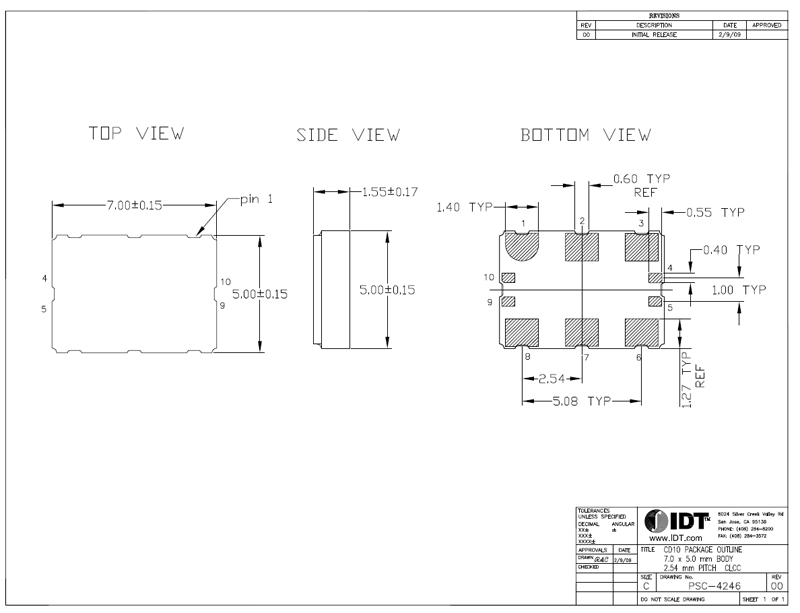
| Pkg. Type: | CLCC |
| Pkg. Code: | CD10 |
| Lead Count (#): | 10 |
| Pkg. Dimensions (mm): | 7.0 x 5.0 x 1.5 |
| Pitch (mm): | 2.54 |
| Moisture Sensitivity Level (MSL) | 1 |
| Pb (Lead) Free | Yes |
| ECCN (US) | EAR99 |
| HTS (US) | 8542.39.0090 |
| Lead Count (#) | 10 |
| Carrier Type | Reel |
| Moisture Sensitivity Level (MSL) | 1 |
| Qty. per Reel (#) | 1000 |
| Qty. per Carrier (#) | 0 |
| Pb (Lead) Free | Yes |
| Pb Free Category | e4 Au |
| Temp. Range (°C) | 0 to 70°C |
| Abs. Pull Range Min. (± PPM) | 4 |
| C-C Jitter Max P-P (ps) | 20 |
| Feedback Input | No |
| Freq. Accuracy Init. (± PPM) | 10 |
| Freq. Accuracy Temp. (± PPM) | 100 |
| Freq. Stability Total (± PPM) | 113 |
| Length (mm) | 7 |
| MOQ | 1000 |
| Output Freq Range (MHz) | 15.476 - 866.67, 975 - 1300 |
| Output Type | LVDS |
| Outputs (#) | 1 |
| Package Area (mm²) | 35 |
| Period Jitter Max P-P (ps) | 4 |
| Period Jitter Typ P-P (ps) | 2.85 |
| Phase Jitter Max RMS (ps) | 0.757 |
| Phase Jitter Typ RMS (ps) | 0.475 |
| Pitch (mm) | 2.54 |
| Pkg. Dimensions (mm) | 7.0 x 5.0 x 1.5 |
| Pkg. Type | CLCC |
| Product Category | Crystal Oscillators |
| Prog. Interface | I2C |
| Reel Size (in) | 13 |
| Requires Terms and Conditions | Does not require acceptance of Terms and Conditions |
| Supply Voltage (V) | 2.5 - 2.5 |
| Tape & Reel | Yes |
| Thickness (mm) | 1.5 |
| VCO Gain Typ. (ppm/V) | 10 |
| Width (mm) | 5 |
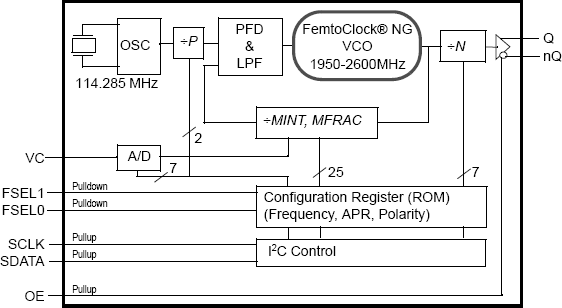
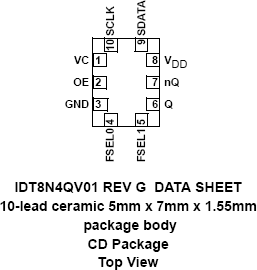
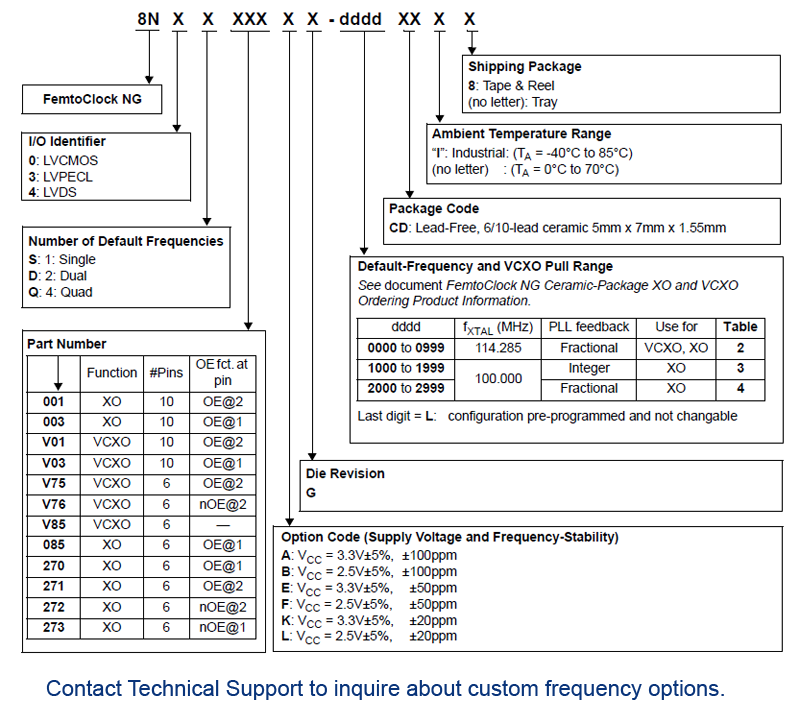
The 8N4QV01 is a Quad-Frequency Programmable VCXO with very flexible frequency and pull-range programming capabilities. The device uses IDT's fourth generation FemtoClock® NG technology for an optimum of high clock frequency and low phase noise performance. The device accepts 2.5V or 3.3V supply and is packaged in a small, lead-free (RoHS 6) 10-lead ceramic 5mm x 7mm x 1.55mm package. Besides the 4 default power-up frequencies set by the FSEL0 and FSEL1 pins, the 8N4QV01 can be programmed via the I2C interface to any output clock frequency between 15.476MHz to 866.67MHz and from 975MHz to 1,300MHz to a very high degree of precision with a frequency step size of 435.9Hz ÷N (N is the PLL output divider). Since the FSEL0 and FSEL1 pins are mapped to 4 independent PLL, P, M and N divider registers (P, MINT, MFRAC and N), reprogramming those registers to other frequencies under control of FSEL0 and FSEL1 is supported. The extended temperature range supports wireless infrastructure, telecommunication and networking end equipment requirements.
