跳转到主要内容

ATLAS in Action: Scalable Asset and Location Tracking Solution Across Industries

图像
This is the blog author photo of Sushmitha Kashyap.
Sushmitha Kashyap
Associate Product Marketing Engineer
Published: February 24, 2026

What is ATLAS?

In today's fast-paced industries, from healthcare to logistics, streamlining operations hinges on real-time visibility and efficient tracking. That's where ATLAS (Asset Tracking & Location at Scale) comes into play. Developed in collaboration with IOSEA, ATLAS leverages advanced Bluetooth® Low Energy (LE) SoCs and proprietary angle-of-arrival/departure (AoA/AoD) algorithms and triangulation to deliver ultra-wideband-comparable (UWB) precision—demonstrating sub-10cm accuracy, while supporting 1000+ tags per locator.

What sets ATLAS apart is its robust performance in dense environments, tracking thousands of assets in challenging RF conditions, like onboard cruise ships, while maintaining ultra-low power consumption and easy deployment. Whether you're managing retail inventory, hospital equipment, or warehouse packages, ATLAS provides a scalable, field-proven platform, complete with off-the-shelf locators, customizable tags, and IOSEA's SEAgnal™ Real-Time Location System (RTLS) microservices. The system includes tags, locators, signal processing software, and RTLS back-end software. It can also be easily integrated with a customer's own RTLS backend and offers by far the best localized tracking in the industry, redefining how businesses and industries track, monitor, and manage assets and people in real time.

When it comes to asset tracking, there are two approaches: point-in-time tracking and real-time location tracking. Point-in-time methods, such as NFC or barcodes, capture location data at intervals. Real-time tracking, on the other hand, can be global, like crowdsourced systems used in "Find My" applications, or localized within a specific environment. ATLAS falls into the localized category, using angle-of-arrival (AoA) technology based on triangulation for precise positioning. Renesas offers a range of advanced solutions for tracking and locating. For insights and guidance on choosing the right solution for your application, explore our "Revolutionizing Asset Management with Location Tracking Solutions from Renesas" blog.

Why ATLAS vs. Other Tracking Approaches?

  • Tag compatibility: Works with multiple tag types, including AoA/AoD-enabled tags, Eddystone, and iBeacon for legacy tags and proprietary ATLAS/ATLASlite schemes for flexible deployments.
  • High-density tracking: Supports 1000+ tags per locator with up to 500 updates per second, ensuring accurate tracking even in non-line-of-sight or challenging RF environments.
  • Flexible placement: Locators can be mounted vertically, horizontally, or at an angle, with spacing up to 20m (10m typical) for optimal coverage.
  • Real-time performance: Delivers a 100Hz refresh rate, ideal for tracking both moving and stationary assets simultaneously.
  • Seamless integration: Easily connects to customer backends or IOSEA RTLS systems, with commissioning tools provided for quick setup.
  • Cost and efficiency advantage: Achieves UWB-equivalent accuracy at Bluetooth LE cost and battery life, maximizing ROI.
  • Efficient provisioning: Simplified planning with fewer nodes required compared to UWB or Channel Sounding.

ATLAS Components

Tags

ATLAS offers flexibility in tag design with either an off-the-shelf solution or a custom design-your-own-tag option. Our Bluetooth LE SoCs offer excellent coin cell battery life, which can support both disposable tag applications as well as replaceable/rechargeable battery tag applications.

Some tag options for ATLAS:

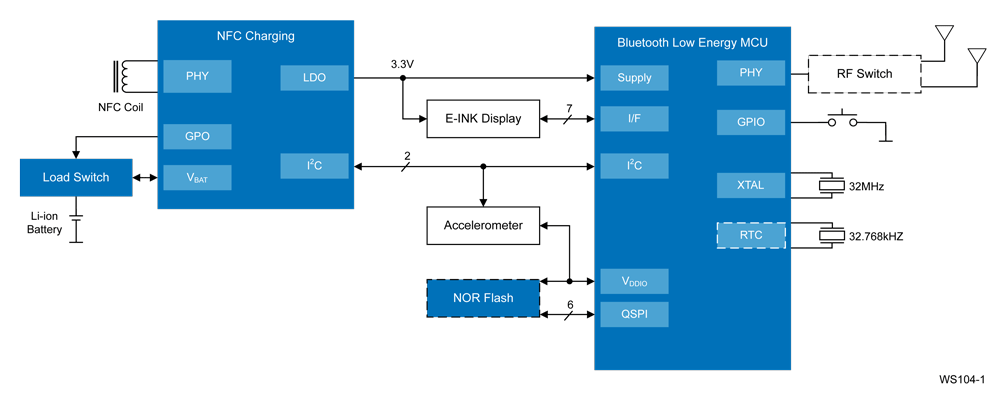
  • Rechargeable tags (DA1469x): A rechargeable, secondary-cell-operated Bluetooth LE tag designed for high-performance location tracking based on our "User Badge for Access and Tracking" solution. It features three CPU cores (Arm® Cortex®-M33F, M0+), an integrated power management unit (PMU), and a sensor node controller for external sensor integration. Optimized for SEAgnal DSP to deliver superior signal quality, it supports RSSI ranging and WiRA ranging, making it versatile for enterprise and consumer ecosystems.
图像
This is a block diagram of a user badge for access and tracking application.
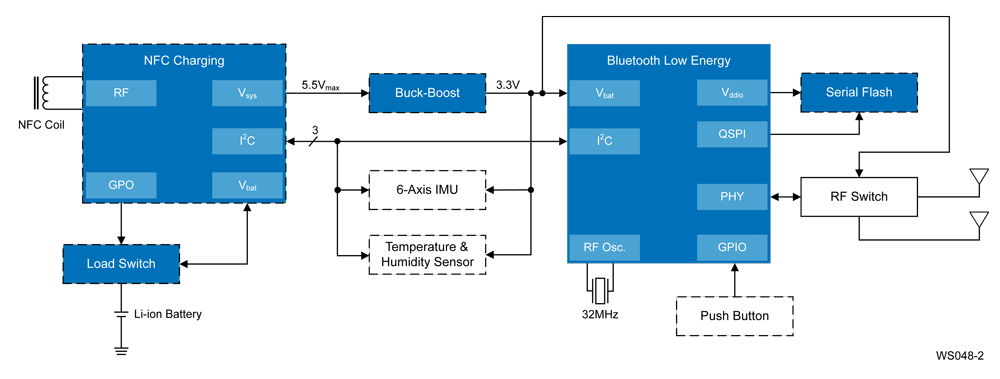
  • Performance tags (DA14594): Based on Renesas' "Bluetooth Low Energy Tags for Proximity and Asset Tracking" solution, offering best-in-class power efficiency and performance with three CPU cores (M33F, M0+), supporting phase-based ranging, AoA for ATLAS, optional NFC charging and tag activation, and integrated sensor control, ideal for scalable, high-precision asset tracking.
图像
This is a block diagram of a Bluetooth Low Energy tag for proximity and asset tracking.
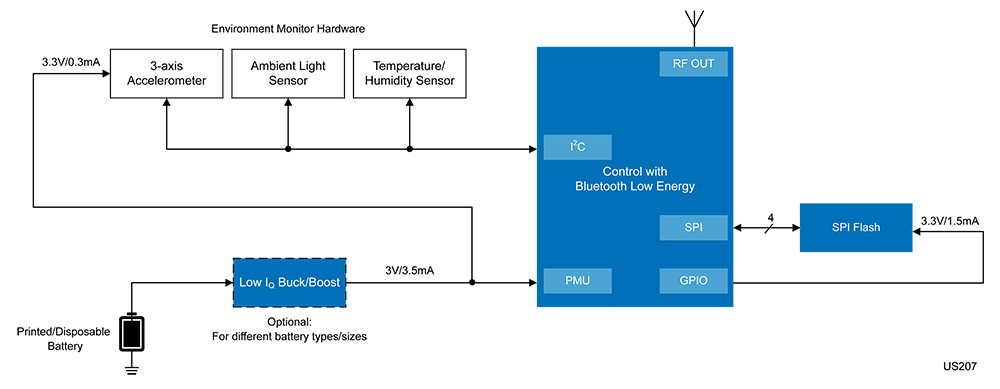
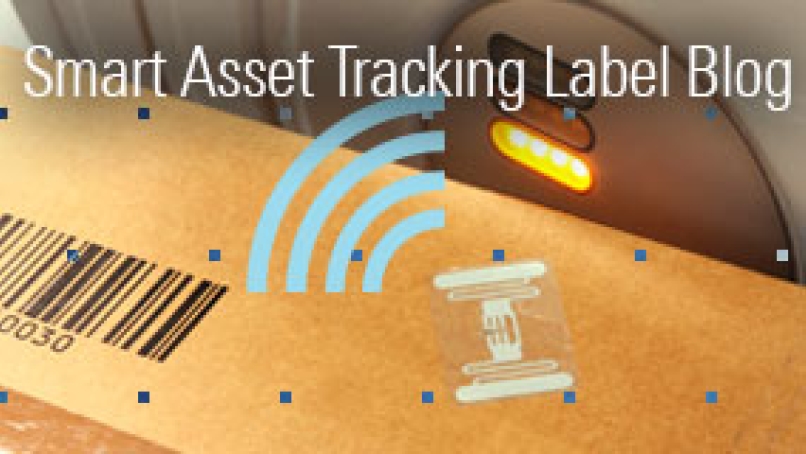
  • Disposable tags (DA1453x): Smart tracking labels based on our "Smart Asset Tracking Label" technology offer ultra-low power Bluetooth LE with <300nA standby, efficient sniff mode, and support for coin cell or printed batteries, delivering low-cost, disposable real-time tracking with integrated data logging.
图像
Smart Asset Tracking Label Block Diagram

SEAgnal

Scalable, Efficient and Accurate software-defined location technology for reliable high precision spatial intelligence. It is built on IOSEA's proprietary digital signal processing framework that unifies radio frequency and antenna modelling with real-time positioning algorithms.

Telemos Locator

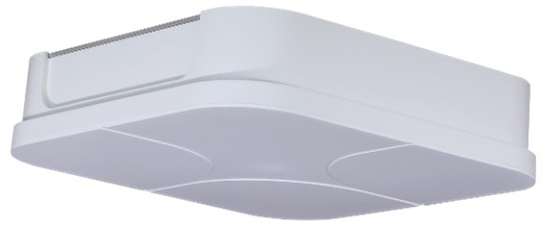
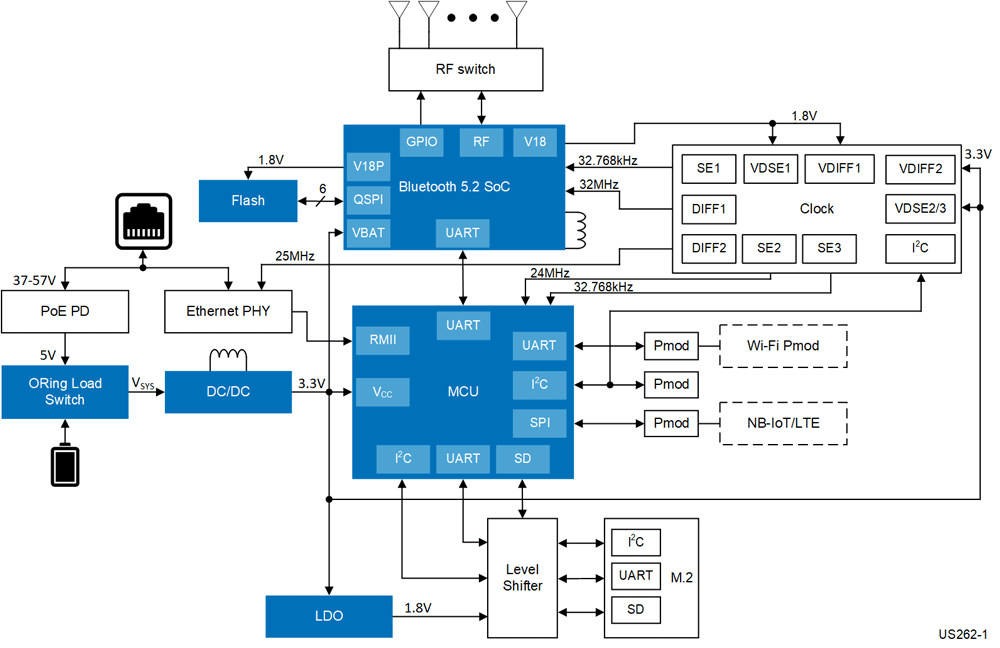
Based on our "Universal Bluetooth Low Energy Angle-of-Arrival Locator for Asset Tracking" application, Telemos locator, developed in partnership with IOSEA, combined with tags, allows for easy adaptation and fast time to market. The locator simultaneously tracks AoA, AoD, ATLAS, and ATLASlite tags. It can track stationary and moving tags, with flexible mounting options. The outdoor range is over 100 meters, with a proven 300m range. With a high efficiency of <2mS per SEAgnal packet, the locator can track 1000+ tags per locator.

图像
This is a photo of a locator for tracking tags.
图像
Universal Bluetooth Low Energy Angle of Arrival Locator for Asset Tracking Block Diagram

Key Features

  • Bluetooth LE angle-of-arrival/departure (AoA/AoD), Eddystone, and iBeacon support
  • High-resolution location tracking with an advanced antenna array
  • Compact, industrial design
  • Power over Ethernet (PoE) and USB-C power options
  • SEAgnal edge packet filtering and multipath mitigation
  • Secure Over-the-Air (OTA) firmware updates
  • SEAgnal™ API is ready for edge and cloud integration

IOSEA RTLS Microservice

The RTLS microservice in ATLAS (Renesas IOSEA) processes IQ samples from locators using SEAgnal algorithms for AoA/AoD and multipath mitigation, delivering sub-10cm accuracy with millisecond latency. It supports high-density tracking via edge-optimized architecture and exposes APIs for anchor/tag provisioning, geofencing, and real-time data streaming.

How ATLAS Works

图像
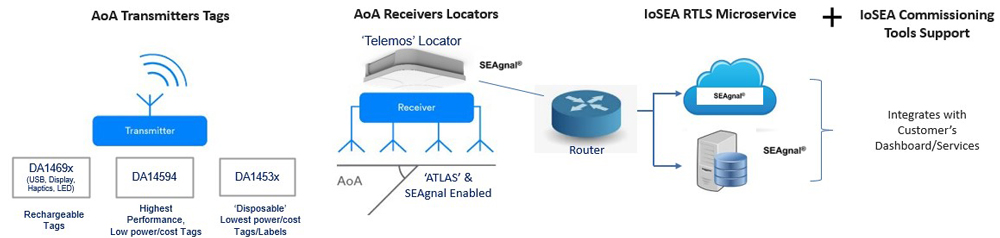
This is a diagram showing the technologies that make ATLAS work.

ATLAS achieves its industry-leading accuracy through a combination of advanced technologies working seamlessly together. 

  1. AoA Transmitter Tags: At the very start of the pipeline, ATLAS-enabled tags transmit lightweight "bursts" or packets. These tags are designed with high intelligence but ultra-low complexity, keeping power consumption minimal and enabling customers to scale to tens of thousands of assets simultaneously.
  2. AoA Receiver Locators: Next, locators pick up these bursts and extract baseband signals and samples, which flow into the signal DSP layer on the locator. This layer cleans and enhances RF data before any positioning occurs, where Renesas radios truly shine, improving signal quality and setting the stage for accurate downstream processing.
  3. IOSEA RTLS Microservice: From there, data enters the Signal Positioning Engine, the mathematical core of the system. These algorithms eliminate interference and multipath errors, enabling ATLAS to track 1000+ tags per locator and process over 500 updates per second. The result is comparable to ultra-wideband systems but achieved using cost-effective Bluetooth hardware.
  4. IOSEA Commissioning Tools Support: Finally, the processed data moves into Signal Backend Services, which handle device management, load balancing, resource allocation, and expose APIs. This backend makes the system enterprise-ready, supporting deployments at the edge, in the cloud, or hybrid models. Customers then connect via APIs or dashboards to unlock real-time outcomes like asset visibility, safety monitoring, and workflow optimization.

For complete coverage, ATLAS uses multi-locator deployment. When several locators detect the same tag, their angle data is combined using multilateration techniques in the RTLS backend. This creates a precise 2D or even 3D position, ensuring continuous, real-time tracking, even in complex environments like warehouses or cruise ships. Watch this ATLAS demo video to see ATLAS in action, demonstrating its ability to track both stationary and moving tags with precision.

Where Can ATLAS Be Used?

ATLAS is an industry-leading UWB-equivalent asset tracking solution for indoor positioning. The applications can be anything that requires multiple stationary/non-stationary assets to be tracked at the same time in an indoor setting. Some examples where ATLAS is used in today's setting include the following.

  • Retail stores: Deploy in grocery stores to prevent theft and improve your store performance. Some applications include the ability to lock shopping cart wheels after a certain distance if no payment is made, and track cart movements to understand customer behavior.
  • Hospitality: Our successes in ATLAS include the world's largest AoA deployment in a cruise setting with over 21 floors, tracking 4300 passengers. ATLAS can be used to upgrade customer service in hospitality in hotels, cruises, malls, resorts, etc. While ATLAS is optimized for indoor environments, it can also extend coverage to semi-outdoor spaces using strategically angled locators.
  • Warehouse and building management systems: Enable warehouses and buildings to track multiple assets and people with accuracy, easily integrating into existing backend systems for scalable, cost-effective indoor location services.
  • Hospitals: Hospitals can lose an estimated 10% to 20% of mobile assets, costing roughly $4000 per bed annually. ATLAS in hospitals can be used to track beds, equipment, patients, doctors, and nurses with sub-meter accuracy, reducing costly replacements, accelerating patient care, and boosting staff efficiency. The geofence feature can also be used for door security on the hospital premises.
  • Livestock training: Every year, US cattle operations lose about 3.9 million animals. ATLAS is a powerful use case for farms to efficiently track livestock with options to include sensors for health monitoring/reporting. Its ability to handle 1000+ tags per second ensures scalability for large farms.
  • Tire pressure monitoring systems (TPMS): ATLAS enables precise tire location tracking and real-time pressure monitoring, improving safety and supporting predictive maintenance for smart fleet management.

ATLAS redefines asset tracking with Bluetooth-based precision, delivering sub-meter accuracy, massive scalability, and seamless integration without the cost and complexity of UWB. Whether you're managing inventory, equipment, or people, ATLAS turns location data into actionable insights that drive efficiency and smarter decisions.

Ready to experience ATLAS? Contact our sales team to schedule a demo. To learn more about ATLAS and its capabilities, visit Asset Tracking & Location at Scale.

文档