Electric bicycles are rapidly reshaping urban mobility by offering a sustainable and flexible alternative to cars while helping reduce congestion. As e-bikes become more advanced and widely adopted, expectations for safety, reliability, and intelligent assistance continue to rise.
However, traditional bicycles, both mechanical and electric, still rely heavily on rider awareness and scheduled maintenance. Mechanical issues often develop gradually, with little or no warning before performance degrades or failures occur. This reactive approach can lead to unexpected breakdowns, higher repair costs, and increased safety risks.
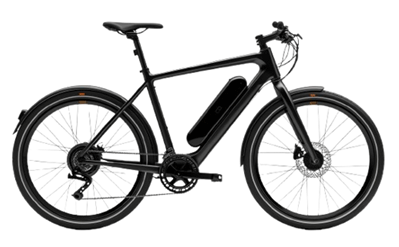
Renesas addresses these challenges with an AI-powered smart e-bike concept that uses embedded edge artificial intelligence (AI) to enable predictive maintenance, intelligent riding assistance, environmental awareness, and optimized battery management—all directly on the bike.
Embedded Edge AI Enables Predictive and Intelligent Cycling
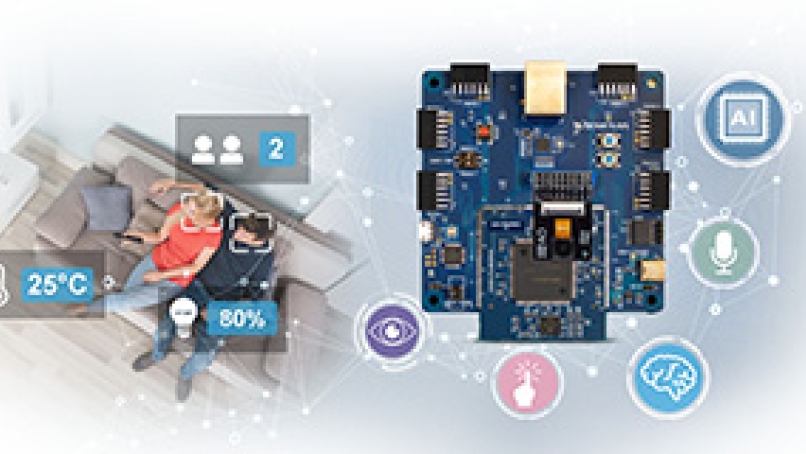
The smart e-bike concept is powered by the Renesas AIK-RA8D1 AI Development Kit, which is based on the RA8D1 microcontroller (MCU), a high-performance Arm® Cortex®-M85 MCU designed for real-time embedded AI applications. Using Renesas Reality AI Tools®, developers can deploy highly optimized AI models that run entirely on the MCU, without relying on cloud connectivity.
This architecture enables a safer, more efficient riding experience while keeping power consumption and system cost low.
The AI-powered smart e-bike enhances the riding experience across two key pillars:
- AI-Driven Condition Monitoring
- Enhanced User Experience with Smoother And Safer Rides
Renesas' E-Bike Concept

- Chain deterioration detection
- Gear anomaly detection
- Bearing failure detection damage occurs
- Frame structuring monitoring
- Load distribution detection
- Surface detection
- Object detection for safe riding
- See with sound spatial awareness
AI-Driven Condition Monitoring
Bicycles, whether traditional, electric, or part of shared mobility fleets, are precision mechanical systems. Their performance depends on the health of critical components such as chains, gears, bearings, and frame connections. Over time, these parts degrade due to mechanical stress, environmental exposure, and riding conditions.
Traditional maintenance strategies rely on periodic inspections or mileage‑based service intervals. These approaches are often imprecise and reactive, increasing the likelihood of unexpected failures.
By embedding the AIK‑RA8D1 together with an accelerometer directly into the-bike, AI‑driven condition monitoring becomes possible in real time. The system continuously analyzes vibration signatures and motion patterns to detect early indicators of mechanical deterioration.
Key predictive maintenance capabilities include:
- Chain Deterioration Detection - The system monitors drivetrain vibration patterns. Deviations from normal behavior can indicate excessive chain wear or lubrication issues before performance noticeably degrades.
- Gear Anomaly Detection - AI models identify abnormal vibration patterns caused by worn or damaged gear teeth or derailleur misalignment, enabling early intervention.
- Bearing Failure Detection - As bearings degrade, they generate distinct high frequency vibration signatures. These can be detected long before audible noise or severe mechanical damage occurs.
- Frame Structure Monitoring - Mechanical looseness or structural changes in the frame can also be identified through vibration analysis, improving rider safety and long-term durability.
How Renesas Enables Smart Bike Monitoring
Developing accurate AI models for condition monitoring requires datasets that represent both normal operation and various mechanical fault conditions.
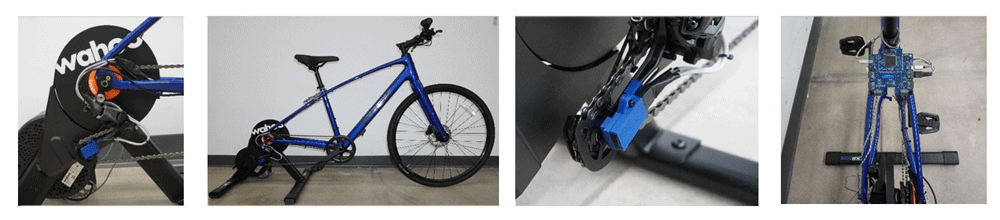
To achieve this, the AIK-RA8D1 AI Development Kit is used with an external accelerometer connected via a Pmod™ module. Both the accelerometer and the development kit are mounted directly on the bicycle, enabling vibration and motion data capture during real-world riding conditions.
Dataset collection is performed using the Data Storage Tool, available as a plug-in within Renesas' e² studio IDE or as a standalone application for third-party IDE users. The tool streams raw sensor data from the accelerometer and stores it for labeling and AI model training.

AI Model Development and Deployment
Once the dataset is labeled and uploaded to Renesas Reality AI Tools, AutoML capabilities are used to train and evaluate multiple AI models in the cloud. These models are then optimized for deployment on the RA8D1 MCU.
The selected model is capable of detecting seven distinct system states:
- E-bike Status - Detects idle and stationary conditions
- Chain Operation - Identifies normal forward and reverse chain motion
- Gear Anomalies - Detects two fault conditions based on derailleur position
- Rear Wheel Structure - Identifies potential rear wheel looseness
The optimized model achieves 99.63% accuracy while requiring only 5KB of memory, enabling efficient execution directly on the RA8D1 MCU.

After deployment, inference results can be monitored in real time using the AI Live Monitor tool integrated within the e² studio development environment.
AI-Enhanced Riding Intelligence
Beyond condition monitoring, the AIK-RA8D1 can function as an intelligent e-bike computer, acting as a central hub that analyzes data from the motor, battery, and sensors—both with and without additional sensing hardware.
Examples of AI-enhanced riding features include:
- Load Distribution Detection - By analyzing vibration and motion signals, the system can estimate rider and cargo weight distribution. This information can be used to recommend or automatically adjust saddle position for improved comfort and pedaling efficiency.
- Surface Detection - AI models can identify riding surfaces such as asphalt, gravel, or uneven terrain. Based on the detected surface, motor torque and power delivery can be dynamically adjusted to improve stability and energy efficiency.
- Object Detection for Safer Riding - When paired with a vision sensor, AI models can detect nearby vehicles and obstacles, triggering alerts when cars approach from blind spots.
- See with Sound Spatial Awareness - Using an array of microphones, the system can estimate the direction of surrounding vehicles and communicate spatial awareness cues to the rider, without requiring constant visual attention.
Enabling the Next Generation of Smart Mobility
The AI-powered smart e-bike concept demonstrates how embedded edge AI can transform personal and shared mobility. By integrating predictive maintenance and environmental awareness directly into the e-bike, manufacturers can deliver safer, more reliable, and more efficient transportation solutions.
Renesas AI technologies are designed to help customers build intelligent mobility systems using scalable edge AI platforms optimized for real-time embedded deployment.
Don’t wait for breakdowns—start building smarter, safer bikes with Renesas.
Ready to bring AI-powered condition monitoring to cycling? Request a demo today and start building next-generation smart e-bike solutions.