
概述
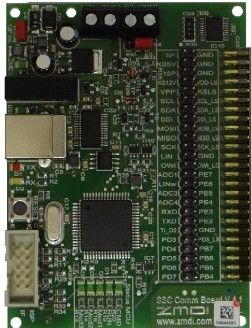
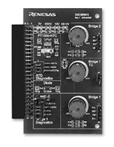
The ZSSC416x evaluation kit provides the hardware required for the configuration, calibration, and evaluation of the ZSSC4161, ZSSC4162, ZSSC4165, and ZSSC4169 sensor signal conditioner (SSC) ICs. A user's PC can communicate with the ZSSC4160 ICs mounted on the ZSSC415x/6x/7x SSC evaluation board through the SSC communication board via a USB connection. The evaluation board can be connected either to a user sensor or to the SSC sensor replacement board (SRB). The SRB serves as a substitute for an actual sensor and can be used for initial calibration or dry-run calibration. On the SRB, the emulated resistive sensor signal is adjusted using a potentiometer.
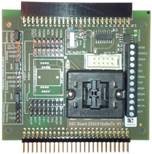
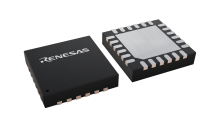
The kit also includes a small populated test board and 10 QFN samples with the required external components already mounted to facilitate rapid prototyping and evaluation.
The boards can also be ordered separately. To facilitate product comparisons, this kit is compatible with selected Renesas devices. Contact your local sales representative for more information.
The evaluation kit software is available online as a free download.
Kit Contents
- SSC communication board
- SSC sensor replacement board
- ZSSC415x/6x/7x SSC evaluation board
- ZSSC416x test board
- ZSSC416x QFN samples (10 pcs.)
- USB cable
特性
- Supports evaluation of ZSSC4161, ZSSC4162, ZSSC4165, and ZSSC4169 sensor signal conditioners
- USB-connected communication interface for device configuration, calibration, and evaluation
- Supports I²C, SPI, and OWI communication interfaces
- Supports initial evaluation and dry-run calibration without a physical sensor
- Modular hardware design for flexible evaluation and prototyping
- Populated test board for rapid device prototyping
- QFN socket enables easy device replacement and evaluation without soldering
设计采用的产品
试用样品与购买

ZSSC4160EVKV1P5
有效附加硬件

SSC Communication Board

SSC Replacement Board
应用方框图
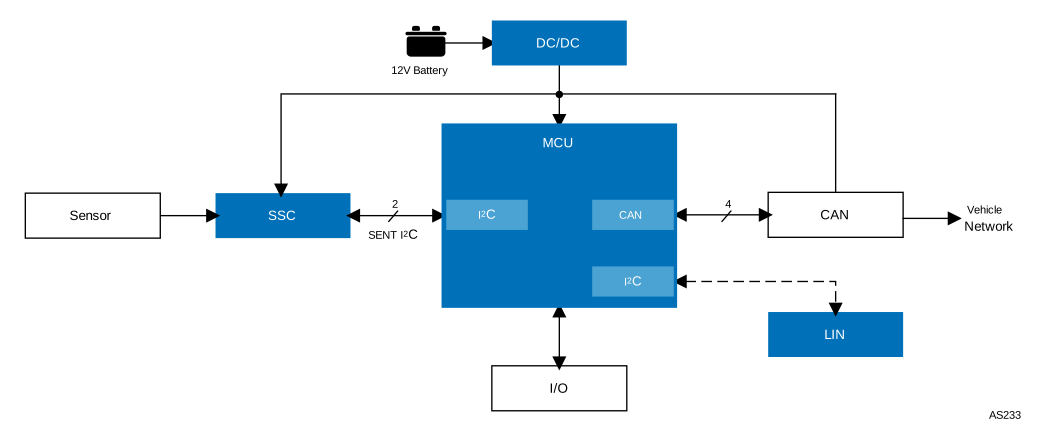 | 带 CAN/LIN 接口的汽车传感器 汽车传感器系统支持 SSC、MCU 和 LIN/CAN,提供高精度、灵活性和可靠的性能。 |
视频和培训
ZSSC416X and ZSSC417X provide highly accurate amplification and calibrated correction of sensory data for resistive bridge and voltage source sensors. The family features SENT 3.0-based ICs and is designed for use in automotive applications. With available diagnostic info, rugged circuit protection, and excellent electromagnetic compatibility.
The family aids designers by lowering power consumption, reducing component count, and saving time spent calibrating sensors. Additionally, the availability of dual-bridge inputs also reduces system complexity and footprint. All of these are important considerations in modern automotive applications where power and space come at a premium.
Related Resources


